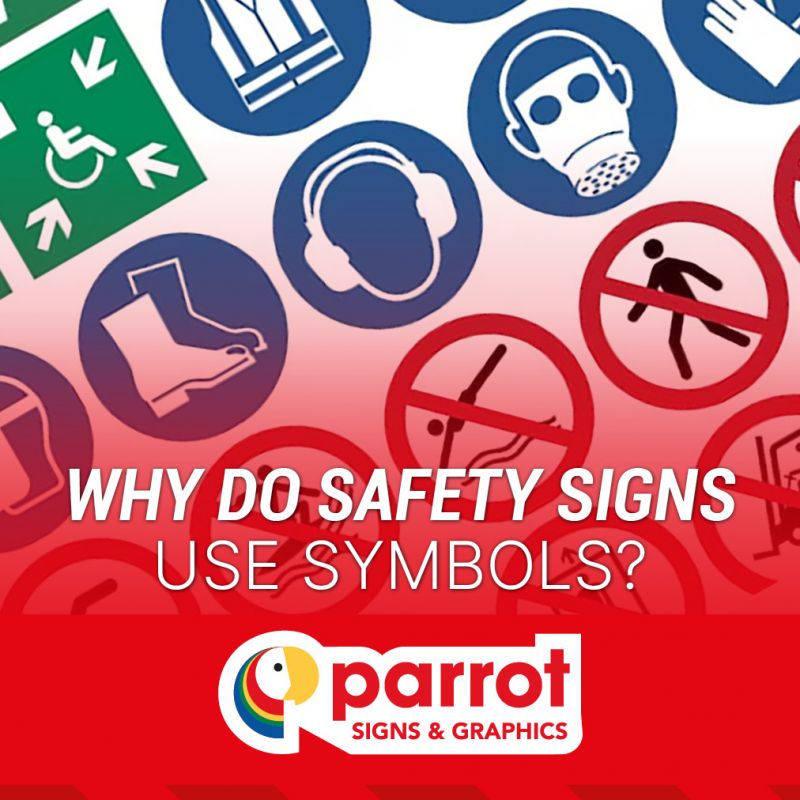
Think about how quickly you recognise a fire exit, first aid point or no smoking sign. In many cases, you probably understand the message before you have even read the words. That is one of the main advantages of using symbols on safety signs.
Safety signs use symbols to communicate information quickly and clearly. Familiar pictograms can help people recognise a message at a glance, even in busy environments or when they speak a different language. The use of internationally recognised symbols also helps create consistency across different workplaces, buildings and countries.
But why are symbols used so widely, and where does the standardisation of these symbols come from?
Why Do Safety Signs Use Symbols?
A well-designed symbol can communicate an idea without needing a long explanation. This is particularly useful when a sign needs to be understood quickly or when there is limited space available.
Consider a familiar fire extinguisher symbol. Most people can recognise the image immediately and understand that it relates to fire-fighting equipment. The same applies to symbols for first aid, emergency exits, no smoking and other common messages.
Symbols can also make signs easier to scan. In a busy workplace, people may not stop to read every word on a sign, but a clear pictogram can catch their attention quickly.
This is one reason symbols have become such an important part of modern safety signage.
What Is ISO 7010?
If you have ever wondered why safety symbols look so similar from one workplace to another, standardisation is an important part of the answer.
ISO 7010 is an international standard covering graphical symbols for safety signs. It provides a consistent approach to the symbols used to communicate safety information, helping make them recognisable across different environments and countries.
The standard includes graphical symbols covering a wide range of messages, including emergency escape and first aid, fire-fighting equipment, prohibition, warning and mandatory actions.
For a company producing safety signs, standards such as ISO 7010 are an important part of understanding how graphical symbols are designed and used.
How Standardised Symbols Make Safety Signs Easier to Recognise
Imagine visiting a workplace in another country. You may not understand the local language, but a familiar symbol can still give you a strong indication of what a sign is communicating.
Standardised graphical symbols provide a level of consistency that helps people become familiar with commonly used safety messages.
This doesn't mean that every safety sign needs to contain a symbol or that symbols can replace words in every situation. In many cases, symbols and text work particularly well together, providing both quick visual recognition and additional information.
The important point is that familiar symbols help create a common visual language.
Can Safety Symbols Cross Language Barriers?
This is particularly useful in modern workplaces where employees, contractors and visitors may speak a variety of languages.
A pictogram can communicate a basic message without relying entirely on written language. For example, the symbol associated with first aid is likely to be recognisable regardless of whether the person looking at it speaks English, French, Polish or another language.
This is one of the reasons graphical symbols are so useful in international workplaces and public environments.
Of course, written information can still be important. A combination of a clear symbol and straightforward wording can provide additional context where it is needed.
We've previously looked at the use of multilingual safety signs and how businesses can use signs to communicate with people who speak different languages.
Why Are Safety Signs Different Colours?
Colour is another important part of how safety signs communicate information. It isn't simply a design choice.
Different colours are commonly associated with different types of messages, which means that people can often identify the general purpose of a sign before they have looked closely at the symbol or wording.
Red Safety Signs
Red is commonly associated with prohibition and fire-related information.
No Smoking signs are a familiar example, while fire-fighting equipment signs also use red prominently.
Yellow Safety Signs
Yellow is commonly associated with warning signs.
The combination of a yellow background, black border and black symbol is highly recognisable and is frequently used to draw attention to a potential hazard.
Blue Safety Signs
Blue is commonly associated with mandatory actions.
These signs often feature a white symbol on a blue circular background and are familiar sights in workplaces and industrial environments.
Green Safety Signs
Green is commonly associated with emergency escape, first aid and safe condition information.
Fire Exit and First Aid signs are perhaps the best-known examples.
The combination of colour, shape and symbol gives people several visual clues about the type of message a sign is communicating.
Why Are Safety Signs Different Shapes?
Shape is another feature that helps make safety signs recognisable.
Circular signs, triangular signs and rectangular or square signs are commonly encountered, and each can form part of the visual language used to communicate different types of information.
When colour, shape and symbol are used together, a sign can communicate a surprising amount of information without relying on a large amount of text.
This is particularly useful in busy environments such as warehouses, construction sites, factories and loading areas, where people may need to identify signs quickly.
Some Safety Symbols Have Become Instantly Recognisable
Some graphical symbols are now so familiar that we barely think about what they represent.
Examples include:
Fire Extinguisher
A fire extinguisher symbol helps identify the location of fire-fighting equipment and is commonly displayed alongside or above extinguishers.
First Aid
The familiar first aid symbol is widely used to identify first aid equipment and facilities.
Emergency Exit
The running-man symbol has become one of the most recognisable safety symbols, particularly when displayed on green emergency exit signage.
No Smoking
The crossed-out cigarette symbol is instantly recognisable and is used extensively on prohibition signs.
Safety Helmet
The hard hat symbol is commonly associated with construction site signs, industrial premises and other working environments where head protection is relevant.
Fork Lift Trucks
The forklift symbol is commonly seen around warehouses, loading bays and industrial premises.
These familiar images demonstrate why standardised symbols can be so effective. Once people become familiar with a symbol, they can often recognise its general meaning almost instantly.
Why Do Some Safety Signs Use Symbols and Words?
Symbols and words don't have to compete with each other. In many cases, they work better together.
A symbol can attract attention and communicate a message quickly, while text can provide additional detail or remove ambiguity.
For example, a fire extinguisher symbol can identify the equipment, while accompanying wording can explain what type of extinguisher it is.
Similarly, an emergency exit sign may combine the familiar running-man symbol with words or directional information.
This combination allows signs to be both visually recognisable and informative.
Frequently Asked Questions About Safety Signs and Symbols
What is ISO 7010?
ISO 7010 is an international standard covering graphical symbols for safety signs. It provides a consistent approach to safety-related symbols used to communicate information in a wide range of environments.
Why do safety signs use symbols?
Symbols can communicate information quickly and are often recognisable without requiring a large amount of text. Familiar graphical symbols can also help people understand signs when they speak different languages.
What do the different colours on safety signs mean?
Different colours are commonly associated with different types of messages. Red is associated with prohibition and fire-fighting equipment, yellow with warnings, blue with mandatory actions and green with emergency escape, first aid and safe condition information.
Why are safety signs different shapes?
Shape forms part of the visual language used by safety signs. Different shapes can help people identify the type of message being communicated, particularly when combined with colour and a familiar symbol.
Are safety signs standardised?
Many safety signs use standardised graphical symbols, with ISO 7010 providing an important international reference for safety sign symbols.
The Importance of Clear Safety Symbols
From a small office to a large construction site, safety symbols are now a familiar part of the built environment. Their combination of recognisable imagery, colour and shape allows information to be communicated quickly and consistently.
For facilities managers, businesses and organisations operating across multiple locations, familiar safety signs can provide a consistent visual language throughout a workplace. At Parrot Signs & Graphics, we supply a wide range of safety signs featuring recognised symbols for use in offices, construction sites, warehouses, commercial premises and other working environments.