
Safety signs are a familiar sight in workplaces, public buildings and industrial environments, yet assumptions about their purpose and effectiveness can lead to poor signage choices. From believing that everyone understands the risks to assuming signs never need replacing, these myths can undermine how effectively important information is communicated. Here are five persistent myths about safety signs, and the truth behind them.
Myth 1: Safety signs just state the obvious
What seems obvious to you may not be obvious to everyone. Visitors, contractors and new starters don't know your site as well as you do. They may not realise where vehicles operate, which areas are restricted or what protective equipment they need to wear.
Familiarity can make us forget how much we have learnt simply by spending time in a particular environment. Safety signs help bridge that knowledge gap, communicating essential information to people who may be encountering a site, process or hazard for the first time.
Rather than assuming everyone knows what to do, clear signage helps make expectations visible and consistent. What feels like common sense to an experienced employee could be vital information for someone visiting for the first time.
Myth 2: Everyone knows what safety signs mean
Not necessarily. Recognised symbols and consistent colours help communicate information quickly, but signs still need to be clear, visible and appropriate for their surroundings. A faded warning, an obscured instruction or an unfamiliar symbol can all cause confusion.
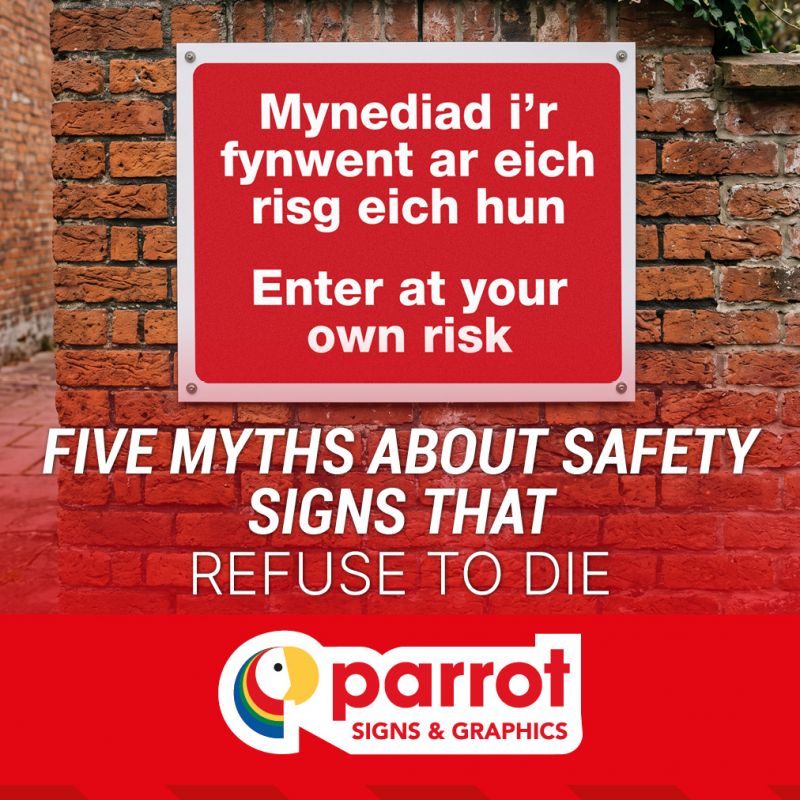
It's also worth remembering that people don't always share the same first language or level of familiarity with workplace terminology. In environments where employees, contractors or visitors speak different languages, relying on written instructions alone may not be enough.
Using recognised safety symbols and clear, consistent signage helps reduce the scope for misunderstanding. You may also need to consider multilingual safety signs if your workforce or customer base includes people who speak different languages.
The important point is not to assume that a sign is understood simply because it seems clear to you. Its purpose is to communicate effectively to the people who need to see it.
Myth 3: Safety signs are only there for legal reasons
Legal requirements are certainly an important reason for using safety signs, but their value extends beyond compliance. Signs communicate instructions, identify hazards, direct people around a site and help visitors understand where they can and cannot go. They are an important part of a workplace's wider communication system.
In the UK, safety signs are required in relevant circumstances where significant risks cannot be avoided or adequately reduced through other preventive measures. They complement measures such as safe working procedures, physical safeguards and appropriate training. They are not a substitute for addressing the underlying risk.
For example, a warning sign can alert people to moving vehicles, but it cannot replace appropriate traffic management. Similarly, a sign indicating that protective equipment is required reinforces an instruction, but it doesn't remove the need to provide suitable equipment or ensure that people understand how to use it.
Good signage therefore serves two purposes: helping businesses meet applicable requirements and making important information easier to understand. A sign is most effective when it forms part of a wider approach to keeping people safe, rather than being treated as a solution in itself.
Myth 4: Digital tools make safety signs less important
Digital tools have transformed how businesses share information. Online training, digital noticeboards and workplace apps can all help communicate instructions, updates and procedures. But they don't make physical safety signs redundant.
Digital information may not be immediately accessible to everyone, and people cannot always stop to check a device when they need to understand a hazard or instruction. Physical signs communicate information at the point where it matters, whether that's a doorway, a production area, a vehicle route or a restricted space.
Signs also remain available without relying on a device, an internet connection or a power supply. A digital system can provide useful additional information, but it cannot always replace a clear warning or instruction that people need to see in their immediate surroundings.
The two approaches work best together. Digital tools can support training and provide more detailed guidance, while physical safety signs offer a consistent, visible reminder of essential information. The aim should be to use the right method for the message, rather than assuming that newer technology automatically makes traditional signage unnecessary.
Myth 5: Safety signs last forever
Safety signs may be designed to withstand demanding environments, but that doesn't mean they will remain effective indefinitely. Sunlight, weather, dirt, cleaning products and general wear can affect their condition over time. Signs can also become damaged, obscured or less relevant when a workplace changes.
A sign that was perfectly clear when installed may eventually become difficult to read. Colours can fade, surfaces can deteriorate and important information may no longer reflect the current layout or risks of a site. Even a sign that looks presentable from a distance may be hard to read when someone needs to act on its message.
Regular checks help identify signs that need cleaning, repositioning, repairing or replacing. It's also important to review signage when equipment, working practices, access routes or site layouts change.
Replacing signs isn't simply a matter of keeping a workplace looking professional. It's about ensuring that important information remains visible, legible and relevant. For more guidance, read our article on how to tell when you need to replace your safety signs.
Safety signs are only effective when people can see them, understand them and act on the information they communicate. Challenging these five myths is a useful starting point for businesses that want to make their signage work harder. Rather than relying on assumptions, take the time to check that signs are clear, appropriate for their surroundings and still fit for purpose.