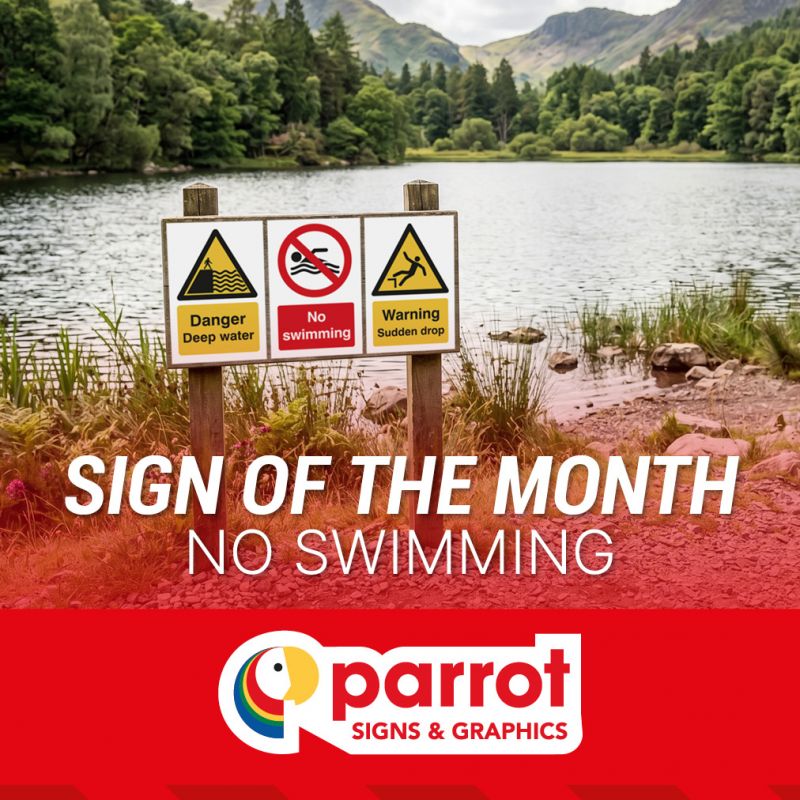
As temperatures rise during the summer months, so too does the risk of accidental drowning. While many people associate water safety with beaches and swimming pools, fatalities and serious incidents also occur at inland waterways, reservoirs, rivers, canals, flooded quarries, construction sites and industrial workplaces.
June marks Drowning Prevention Week, the Royal Life Saving Society UK’s annual campaign to raise awareness of water safety ahead of the busy summer period. Timed just before the school holidays, the initiative highlights the increased risks around open water as temperatures rise and more people spend time outdoors. For employers and organisations managing water hazards, it serves as an important reminder to review risk controls, emergency procedures and safety signage.
For organisations responsible for land, premises or work activities near water, drowning prevention should never be left to chance. Safety signage, particularly No Swimming signs, plays an important role in reducing risk and discouraging dangerous behaviour before incidents occur.
In the UK and Ireland, 249 people accidentally drowned in 2024, with warmer weather often contributing to an increase in incidents involving open water. Teenagers and young adults are disproportionately represented in accidental drownings, particularly where unauthorised swimming takes place in rivers, lakes and former industrial sites. Many accidental drownings occur in inland waterways rather than at the coast, highlighting the risks posed by rivers, reservoirs, canals and former industrial locations.
Why Water Can Be More Dangerous Than It Looks
Open water presents hazards that are often underestimated. Even calm-looking water can conceal serious risks including:
-
Sudden cold-water shock
-
Hidden debris or submerged objects
-
Strong currents or unstable ground
-
Deep or uneven water levels
-
Entrapment hazards
-
Poor visibility and difficulty exiting the water
Disused quarries, drainage lagoons, docks, reservoirs and industrial water features may appear inviting during warm weather but can become fatal environments within moments.
Unfortunately, dangerous swimming is often driven by impulsive decisions, particularly during periods of hot weather. Calm-looking water can create a false sense of safety, while cold-water shock, hidden hazards and rapidly changing depths are frequently underestimated. For younger people especially, peer pressure and the appeal of cooling off can outweigh obvious risks; making clear, highly visible signage even more important.
A prominent No Swimming sign immediately communicates that entering the water is prohibited and unsafe. In higher-risk areas, additional signs such as a Danger of Drowning sign or a Danger Deep Water sign may also be appropriate to reinforce the severity of the hazard.
However, safety signs should never be viewed as a standalone control measure. Instead, it forms one part of a wider drowning prevention strategy.
Employer Responsibilities Around Water Safety
Under the Health and Safety at Work etc. Act 1974 and the Management of Health and Safety at Work Regulations 1999, employers have a legal duty to assess and control risks to employees and others who may be affected by their work activities. This includes work carried out near water.
The Health and Safety Executive (HSE) states that where employees work over or near water, organisations must have measures in place to prevent falls into water and ensure safe rescue if someone enters it unexpectedly.
Depending on the environment, employer responsibilities may include:
-
Carrying out suitable and sufficient risk assessments
-
Installing barriers, fencing or edge protection
-
Providing clear warning signage where relevant
-
Supplying life jackets or buoyancy aids where drowning risks exist
-
Providing throw lines, grab equipment or rescue devices
-
Maintaining emergency rescue procedures and alarm systems
-
Providing rescue boats with trained operators where necessary
-
Training staff to respond appropriately in emergencies
Employers should also be aware of the Health and Safety (Safety Signs and Signals) Regulations 1996, which require safety signs to be used where significant risks remain and cannot be adequately controlled by other means. In environments involving open water, prohibition signs such as No Swimming signs and warning signs including Danger of Drowning or Danger Deep Water can reinforce site rules and help communicate hazards clearly to workers, contractors and members of the public.
Industries such as construction, ports, drainage management, agriculture, manufacturing and utilities may face heightened risks where employees work near rivers, docks, tanks, lagoons or floodwater.
Small Sign, Important Message
No sign can remove risk entirely. However, clear and well-positioned safety signage can help prevent a dangerous decision before it happens. When combined with appropriate barriers, rescue planning, staff training and risk management, No Swimming signs play a small but potentially life-saving role in drowning prevention.