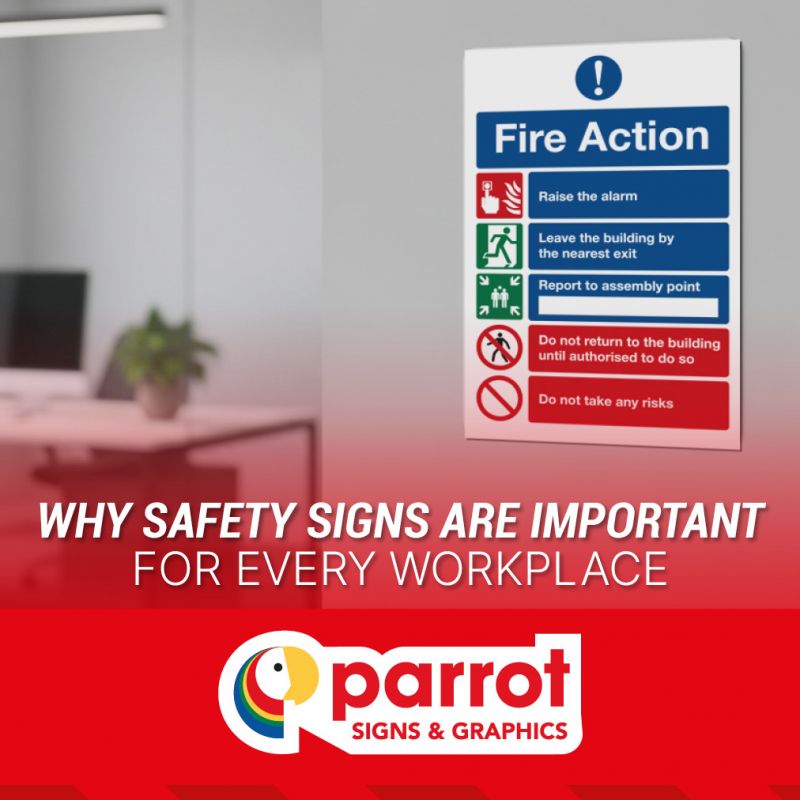
Walk into any workplace such as a construction site, a hotel kitchen, a retail stockroom, or even a quiet office, and you’ll see safety signs doing an enormous amount of silent work. They guide, warn, instruct, and reassure. They help people make the right decisions quickly. And, crucially, they prevent accidents long before they have the chance to happen.
The Health and Safety Executive (HSE) is clear about their purpose, stating that employers must use safety signs “where there is a significant risk that can’t be avoided or controlled in any other way.” That line alone captures their importance. Signs aren’t optional extras or nice‑to‑have additions; they’re a legal requirement and a practical tool for protecting staff, visitors, and the public.
Yet despite their simplicity, safety signs are often undervalued. They fade into the background, become outdated, or are placed without much thought. But when they’re chosen well and used consistently, they become one of the most effective communication tools in any organisation. The HSE reinforces this point: “Safety signs are only effective if they are understood.” Good signage doesn’t just exist; it actively helps people stay safe.
Clear communication that cuts through the noise
Every workplace has its own rhythm, pressures, and risks. Safety signs provide a universal language that cuts through all of that. They work regardless of someone’s first language, literacy level, or familiarity with the environment. They offer clarity in moments where hesitation could lead to harm. And they support a culture where safety is visible, shared, and taken seriously.
Construction: high‑risk environments need high‑clarity messaging
Construction sites are dynamic, fast‑moving, and inherently hazardous. Mandatory PPE signs, hazard warnings, and site‑specific instructions help workers and visitors navigate safely. Clear, durable signage reduces the likelihood of falls, collisions, and equipment‑related injuries.
Manufacturing: machinery, movement, and materials
Factories and production facilities rely on consistent visual cues to keep people safe around automated equipment, forklifts, and chemical processes. From lockout‑tagout reminders to COSHH‑related warnings, factory and warehouse signs help maintain discipline in environments where a moment’s inattention can have serious consequences.
Hospitality venues: protecting staff and guests
Restaurants, bars, hotels, and event spaces face a different set of challenges; hot kitchens, slippery floors, cleaning chemicals, and public footfall. Catering and janitorial signs support both compliance and customer experience, guiding guests away from hazards and helping staff maintain safe working practices during busy service periods.
Leisure centres: public spaces with varied risks
Swimming pools, gyms, and sports facilities must communicate rules and risks clearly to a wide audience. Wet‑floor warnings, poolside safety instructions, and equipment‑use guidance all help prevent injuries and ensure visitors understand their responsibilities.
Read more about the importance of safety signs in leisure centres.
Offices: low‑risk doesn’t mean no‑risk
Even in quieter environments, signage plays a role, from fire safety and first‑aid points to reminders about safe storage, trip hazards, or restricted areas. Offices often host visitors unfamiliar with the layout, making clear directional and emergency signage essential.
Retail stores: busy spaces with constant movement
Shops combine staff activity, customer traffic, deliveries, and stock handling. Retail signage helps manage back‑of‑house risks, guides customers safely, and supports compliance with fire and evacuation regulations.
A small investment with a big impact
Safety signs don’t replace training, supervision, or good management but they do reinforce all three. They act as prompts, warnings, and reassurance. They help organisations meet their legal duties. And they send a clear message: safety matters here.
When signage is well‑designed, well‑placed, and well‑maintained, it becomes part of the fabric of a workplace. It helps people feel confident, informed, and protected. It reduces accidents, supports compliance, and contributes to a culture where everyone understands their role in keeping themselves and others safe.
For any organisation, in any industry, safety signs are a small investment with a disproportionately large return. They’re not just symbols on a wall, they’re one of the most effective tools we have for creating safer, more responsible workplaces.