
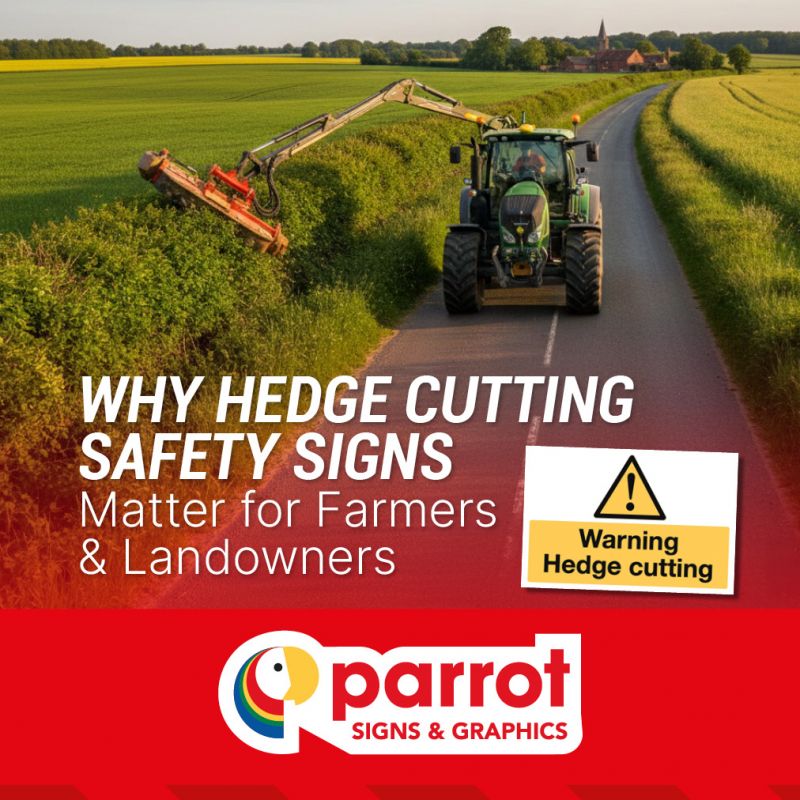
Hedge cutting is an essential part of land management across the UK, but it can also present risks to workers, road users, and pedestrians. A clear, well‑placed safety sign is one of the simplest and most effective ways to protect everyone in the vicinity. The Warning: Hedge Cutting safety sign alerts the public to sharp debris, large moving machinery, and trimming activity, helping to prevent accidents and keep rural roads safe.
Hedge Cutting and the Law
UK legislation restricts hedge cutting between 1 March and 31 August to protect nesting birds during their breeding season. This means that the legal window for hedge maintenance runs from September through February, with winter being the busiest period for farmers and contractors. By trimming hedges during this time, landowners comply with the Wildlife and Countryside Act 1981 while also improving visibility on rural roads and maintaining healthy growth for the year ahead.
Click here to find out more about the law on hedge cutting.
Why Safety Signs Are Essential
Hedge cutting often takes place along lanes, bridleways, and footpaths where members of the public may be passing. Hazards include:
- Sharp branches and debris scattered on the roadside.
-
Large agricultural vehicles manoeuvring in narrow spaces.
-
Reduced visibility caused by machinery or temporary obstructions.
A Warning: Hedge Cutting safety sign mounted on a stanchion is ideal for these situations. It can be positioned at the roadside and moved easily as work progresses, ensuring that drivers slow down, cyclists take extra care, and walkers remain alert.
Practical Advice for Farmers and Contractors
When planning hedge cutting, it’s important to balance efficiency with safety and compliance. Key points to remember include:
- Respect the closed season: Never cut hedges between March and August unless you have a specific exemption (such as sowing oilseed rape in August).
-
Check for wildlife: Even outside the nesting season, inspect hedges carefully to avoid disturbing roosting birds or other protected species.
-
Maintain equipment: Ensure cutting machinery is serviced and operators are trained for roadside work.
-
Manage debris: Clear cuttings promptly to prevent hazards for vehicles, livestock, and walkers.
-
Communicate clearly: Place safety signs well in advance of the work area to give road users time to react.
Hedge cutting isn’t just about keeping fields tidy, it also plays a vital role in supporting rural communities. Well‑maintained hedgerows improve visibility on narrow lanes, reduce the risk of accidents, and help preserve traditional field boundaries. They also encourage healthy regrowth, which benefits wildlife outside the nesting season. By combining good practice with clear safety signs, farmers show respect for both their neighbours and the environment. Road users appreciate the warning, while landowners gain peace of mind knowing they are working within the law and safeguarding everyone who shares the countryside.
Flexible and Effective Safety Signs
Because hedge cutting often moves along stretches of road or field boundaries, flexibility is key. The Warning: Hedge Cutting safety sign is designed to be relocated quickly and securely. Mounted on a stanchion, it stands at eye level for drivers and is sturdy enough to withstand winter weather. For contractors, this means less downtime and more confidence that the public is protected.
Safety Signs Safeguard Communities
Hedge cutting is a vital part of rural land management, but it comes with responsibilities. By displaying a Warning: Hedge Cutting safety sign, farmers and landowners show their commitment to safety, compliance, and community care. It’s a small step that makes a big difference; ensuring hedge work is carried out responsibly, legally, and with the wellbeing of everyone in mind.