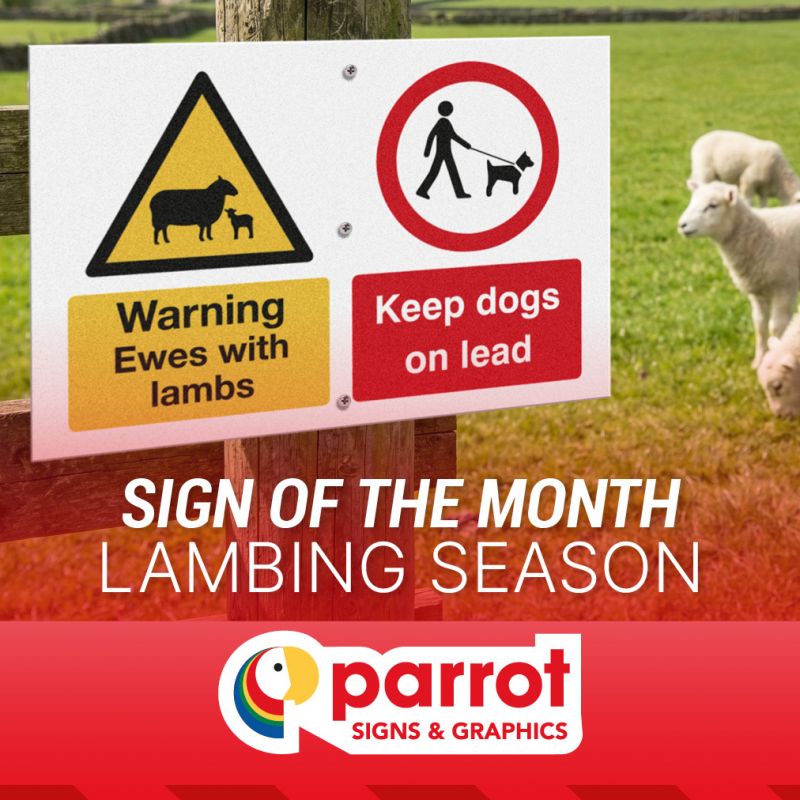
Lambing season transforms the British countryside into something truly special: quiet fields, new life, and ewes fiercely protecting their young. It’s also a time when farmers face heightened risk from dogs being walked off‑lead.
This is where safety signs become more than just functional. They become essential tools for preventing distress, injury, and loss. The dual “Ewes with Lambs” and “Keep Dogs on Leads” signs are a perfect example of how simple visual cues can change behaviour and protect vulnerable livestock.
Understanding the Risk to Ewes and Lambs
Newborn lambs are fragile, and their mothers are instinctively defensive. Even the calmest dog can trigger panic in a flock. It doesn’t take a bite or a chase, just the presence of an off‑lead dog can cause ewes to scatter, lambs to become separated, or pregnant sheep to miscarry due to stress.
Farmers across the UK report that dog‑related incidents spike during lambing season. Many dog owners genuinely don’t realise the harm their pets can cause. They assume “my dog wouldn’t hurt anything”, unaware that livestock worrying includes any behaviour that causes stress, not just physical attacks.
This is where clear, visible communication becomes vital.
How Safety Signs Influence Behaviour
Well‑placed safety signs act as immediate prompts that cut through assumptions and remind walkers of their responsibilities. The combination of the yellow warning triangle (ewe and lamb) and the red “Keep Dogs on Leads” symbol works on two levels:
-
Emotional impact: The silhouette of a ewe and lamb taps into empathy. People instinctively understand the vulnerability of young animals.
-
Authority and clarity: The red circular sign signals a rule, not a suggestion. It removes ambiguity and makes expectations explicit.
This pairing is powerful because it blends warmth with firmness, exactly the tone that resonates with countryside visitors who may not be familiar with farming realities.
Reducing Distress Through Better Communication
Farmers who use clear signage consistently report fewer incidents of livestock worrying. It’s not just about warning people; it’s about educating them in the moment they need it most.
Effective safety signage:
-
Sets expectations before walkers enter the field
-
Reduces the likelihood of “I didn’t know” excuses
-
Creates a culture of responsible dog walking
-
Protects both livestock and the dogs themselves
During lambing season, when emotions and risks run high, these signs become a frontline defence.
Practical Tips for Farmers
To maximise the impact of your farm safety signs:
-
Place them at every entry point to fields containing ewes and lambs.
-
Ensure they’re clean, visible, and positioned at eye level.
-
Use durable materials that withstand weather and remain legible.
-
Consider pairing signs with community messaging such as in local Facebook groups, parish newsletters, or village noticeboards.
-
Replace faded or damaged signs promptly; clarity is everything.
Read our article about how to tell when it's time to refresh your safety signs.
A Shared Responsibility
The countryside is a shared space, but lambing season demands extra care. Farmers work tirelessly to protect their flocks, and dog owners play a crucial role in that effort. By using clear, consistent safety signs, farmers can communicate the seriousness of the situation without confrontation, helping walkers make better choices and reducing the risk of distress to ewes and lambs.
In the end, these signs aren’t just instructions, they’re safeguards for animal welfare, farming livelihoods, and the peaceful coexistence of everyone who enjoys the countryside.
For more information about the The Dogs (Protection of Livestock) (Amendment) Act 2025, which comes into effect in March 2026, visit Defra's website.